When examining certain corporate transactions within Sri Lanka’s capital markets and
its financial regulatory apparatus, the law often resembles a spider’s web: it catches the small insects while allowing the massive predators to tear right through. The legal and financial complexities surrounding Asia Capital PLC, a prominent company listed on the Colombo Stock Exchange (CSE), and its majority shareholder, Malaysian national Vijayeswaran S. Vijayaratnam (alias Vijay Eswaran), perfectly illustrate this phenomenon.
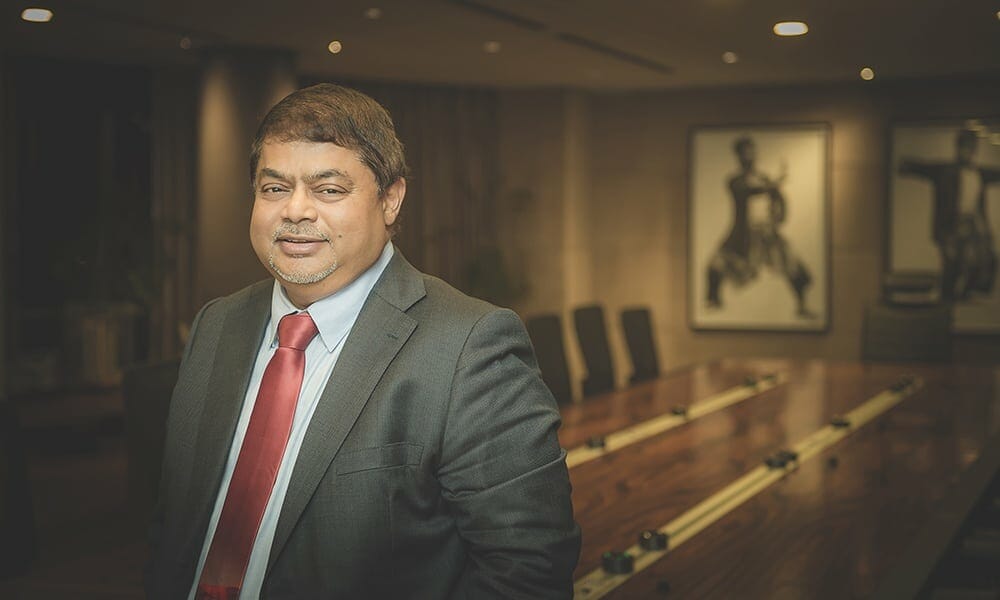
Dr-Vijay-Eswaran
Despite facing international allegations of orchestrating global pyramid schemes and money laundering—compounded by active arrest warrants from multiple countries, including India—Eswaran continues to comfortably hold a 71.6% majority stake in a legitimate, publicly listed Sri Lankan entity. How does he continue to reap profits? Is this a glaring jurisprudential loophole, or a ruthless, highly sophisticated exploitation of the "corporate veil"?
Pyramid Fortunes and the International Manhunt
Vijay Eswaran is the mastermind behind 'QNet' (formerly QuestNet / GoldQuest), an enterprise widely categorized by economists and regulators as a colossal pyramid scheme spanning over 100 countries. Law enforcement agencies across India, the Philippines, Indonesia, and several African nations have initiated severe penal actions against him. In India alone, the Economic Offences Wing (EOW) of the Mumbai Police has issued lookout circulars against him in connection with a Rs. 4.25 billion fraud investigation.
The paradox, however, lies in his Sri Lankan operations. Although the Central Bank of Sri Lanka (CBSL) has officially designated QNet as a prohibited pyramid scheme under the Banking Act No. 30 of 1988, Eswaran effectively reigns over a segment of the local capital market via Asia Capital PLC. Have the CBSL and the Financial Intelligence Unit (FIU) remained dormant? The reality is more complex: while local authorities enforce existing statutes, modern financial manipulators operate several steps ahead of domestic regulatory frameworks.
The True Face Behind the 'Corporate Veil'

Eswaran evades Sri Lankan legal scrutiny through highly technical corporate maneuvering. He funnels capital into Asia Capital not under his personal name, but through a labyrinth of offshore entities—such as 'Fast Gain International Limited'—registered in Malaysia or other tax havens.
Here, the foundational company law concept of the "corporate veil" acts as an impenetrable shield. Under criminal law, confiscating property on the grounds of money laundering requires proving beyond a reasonable doubt that the assets were derived from a "predicate offence." Although Eswaran faces severe charges globally, no Sri Lankan court has convicted him to date. Furthermore, the capital he injected entered the country as foreign remittances through official, regulated banking channels. He continues to thrive as the ultimate owner of a listed company by slipping through the corporate shield and exploiting the glaring loopholes in domestic laws regarding the disclosure of Ultimate Beneficial Owners (UBOs).
Raju Radha: Proxy or Strategic Operator?

Raju Radha
Amidst this controversial ownership structure, Raju Radha, the current Managing Director of Asia Capital, has frequently been labeled by critics as Eswaran's mere "proxy." However, a deeper analysis of the company's internal data, corporate actions, and financial reporting paints a fundamentally different picture.
The most severe existential crisis in the company's recent history was a $6 million dispute with a consortium of Japanese investors operating under CC Trust Pte Ltd in Singapore. After a criminal breach of trust case filed at the Colombo Fort Magistrate's Court was dismissed twice, Radha managed to navigate the dispute toward a landmark amicable settlement in early 2026. Averting the imminent threat of forfeiting the company's entire hotel chain to the Japanese investors, he resolved the crisis by strategically transferring only the shares of 'The River House' hotel.
Amidst severe liquidity constraints, Radha has successfully narrowed the company's net loss margin by 2026 through the aggressive divestment of non-performing assets. The data suggests that Raju Radha is not merely a nominal puppet for the majority shareholder, but a pragmatic crisis manager who took the helm of a sinking enterprise to execute a vital corporate restructuring strategy.
A Wake-Up Call for Regulators

The ongoing saga of Asia Capital and Vijay Eswaran is not an isolated corporate anomaly; it is a profound indictment of the regulatory architecture governing Sri Lanka's capital markets.
As long as the Securities and Exchange Commission (SEC) relies strictly on surface-level technical compliance, there is no structural barrier preventing internationally indicted figures from building financial empires locally under the protection of the corporate veil. If Sri Lanka is to prevent illicit wealth—extracted from the public via global pyramid schemes—from being laundered and integrated into the legitimate domestic economy, a robust, unified regulatory mechanism is mandatory. This requires seamless intelligence sharing and proactive enforcement among the SEC, the CBSL’s FIU, and the Criminal Investigation Department (CID).
Unless laws mandating the strict and transparent disclosure of Ultimate Beneficial Owners (UBOs) are urgently enacted for all listed entities, Sri Lanka will inevitably cement its status as a "safe haven" for international economic criminals. The speed at which authorities act to close these legislative gaps will directly dictate the integrity and future trajectory of the broader national economy.