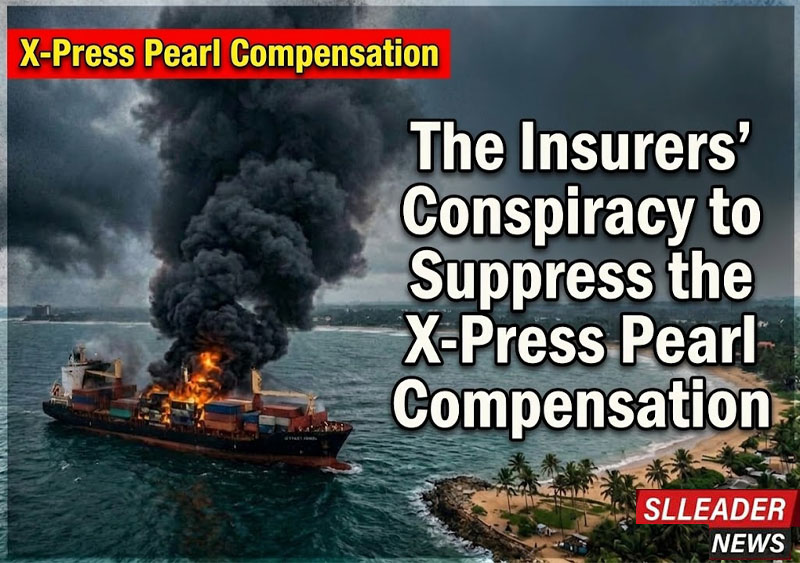
X-Press Pearl Compensation: The Global Media Operation Orchestrated by Insurance Companies Under the Guise of 'Economic Risk'
The series of articles concerning the X-Press Pearl maritime disaster,
which simultaneously surfaced last Friday in the Daily FT and Lankadeepa newspapers, transcends conventional journalistic reporting. It is the conspicuous manifestation of a highly sophisticated psychological and ideological operation launched within Sri Lanka by international insurance conglomerates, utilizing the names and subject-matter expertise of industry veterans such as Sean Van Dort as a smokescreen.
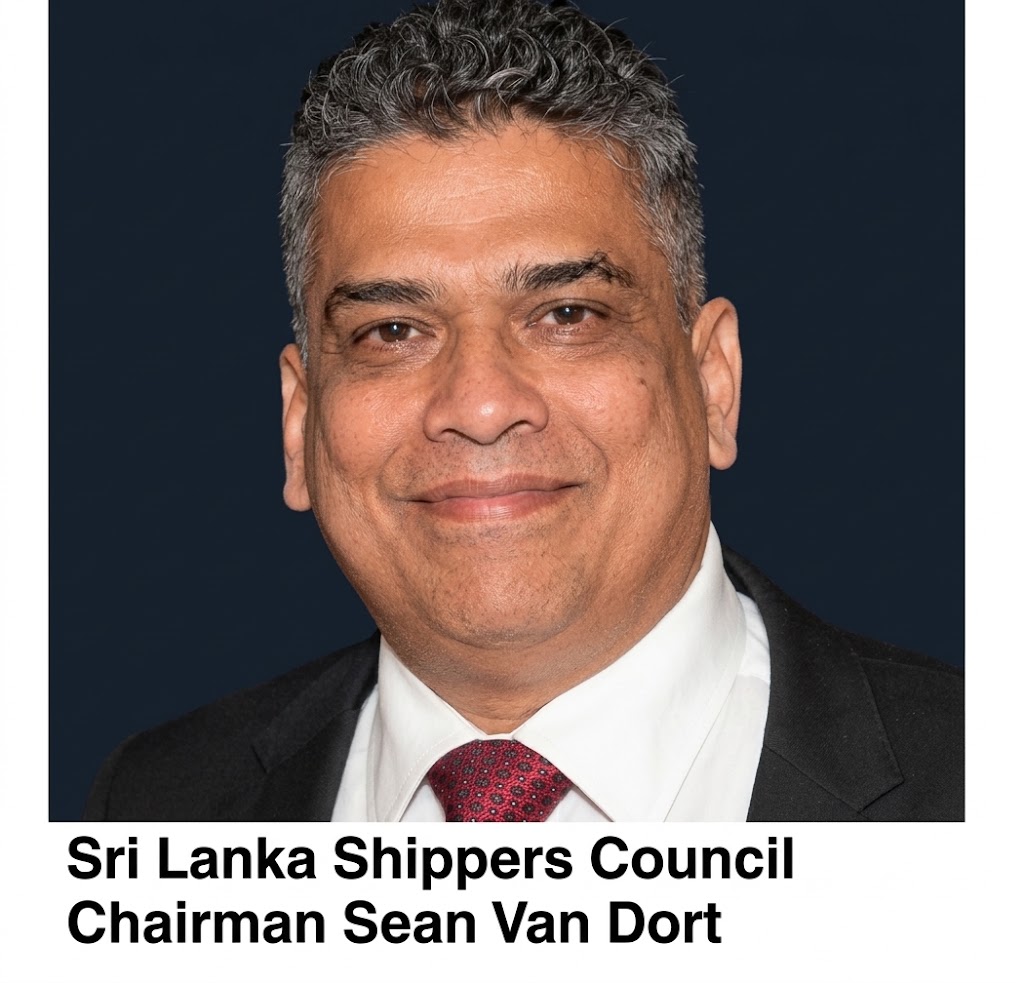
Based on our analysis of the global political economy and capital dynamics, what is transpiring here is the deliberate fabrication of a theoretical crisis. Specifically, it is an exercise in ideological violence designed to convince the victim (Sri Lanka) that the very act of demanding justice is the catalyst for its own demise.
The Artificial Bogeyman of Economic Risk
The central thesis of Van Dort’s article is that prolonging the X-Press Pearl compensation litigation will erode international shipping companies' confidence in the Port of Colombo, thereby risking the diversion of our transshipment volumes to India's port network (which boasts a 25-million TEU capacity). At first glance, this appears to be a profoundly logical warning, ostensibly penned out of genuine concern for the national economy. However, any discerning reader of the subtext will recognize this not as an objective economic analysis, but as a thinly veiled threat from international insurers.
The reality is that the aggregate compensation owed to Sri Lanka amounts to approximately USD 6.4 billion. To evade this colossal financial liability, the implicated international insurance firms are currently funneling millions of dollars into prominent local public relations and advertising agencies (PR Agencies). Their objective is to propagate a narrative through national media that "the delay in delivering environmental justice equates to the strangulation of the future economy." Resource persons like Van Dort are deployed in this context—whether wittingly or unwittingly—to bestow academic and professional legitimacy upon this propaganda apparatus.
Sabotaging the Compensation Commission and the Legal Conspiracy
This media campaign does not operate in a vacuum. Concurrently, severe acts of sabotage are unfolding within the legal and institutional frameworks. The process has been crippled to such an extent that recovering even the initial interim claim of USD 999 million has been rendered impossible. The complaint lodged with the Bribery Commission against three Supreme Court Justices in relation to this matter strongly suggests that the delay in the compensation process is driven not merely by bureaucratic inertia, but by active legal sabotage.
This delay is directly orchestrated by the insurance companies and their local proxies. Subsequently, by citing this manufactured delay to argue the existence of "uncertainty" and by projecting the specter of escalating insurance premiums, their ultimate objective is to coerce the government into an expedited settlement for a negligible fraction of the actual claim.
Arjuna Hettiarachchi, Sea Consortium Chairman
International Maritime Law and Geopolitical Realities
Sri Lanka is not subjected to ridicule within the international commercial arena because it demands compensation. Rather, it is mocked because we lack a state apparatus with the fortitude to secure the restitution commensurate with the damages sustained, based on precise scientific assessments and in strict adherence to international law.
It is true that vessels do not call at Colombo solely due to its geographical positioning. Nevertheless, maritime traffic is not dictated exclusively by insurance premiums contingent upon a single environmental lawsuit. Route efficiency, operational expenditures, and transit times exert a substantially greater influence. To investors, true business risk does not stem from a state pursuing legitimate litigation, but rather from a state apparatus compromising its legal sovereignty by capitulating to the bribery or undue influence of multinational corporations.
The crisis confronting us at this juncture is not "an environmental crisis morphing into an economic crisis." The genuine crisis is the concerted endeavor by global insurance capital to misappropriate USD 6.4 billion in compensation by subjugating Sri Lanka’s intelligentsia, media, and legal system to its hegemony.
The concluding assertion in the article—that "just as environmental damage has a price, uncertainty too has a price"—is an unequivocal threat directed at the Sri Lankan government by international insurers. At this critical juncture, policymakers and the public must not yield to this intimidation and settle for a pittance. Instead, they must unequivocally defeat this reprehensible media operation and legal conspiracy orchestrated by the insurance companies, leveraging the provisions of international law to their absolute fullest. Genuine economic security is contingent solely upon such resolute state intervention.
#Sirimali Liyanagama
SLLeader.lk
Right to Reply
As a responsible media organization, we strictly uphold the "Right to Reply". If you or your organization are mentioned in any of our articles and wish to express an objection, share a different perspective, or provide a factual clarification, you have the right to do so. We are committed to fair and balanced journalism.
Please submit your responses or clarifications to:
[This email address is being protected from spambots. You need JavaScript enabled to view it. / whatsapp 0774945996]
Editor's mail - This email address is being protected from spambots. You need JavaScript enabled to view it.